How Long Do Fences Last by Material
Fence lifespan depends heavily on material. Wood lasts 15 to 20 years with regular maintenance, vinyl 20 to 30 years, aluminum 30 to 50 years, and chain link 15 to 25 years. In Knoxville, TN, the combination of 47.9 inches of annual rainfall and clay soils accelerates rot and post heaving, making material choice and proper installation especially important.
Updated Jul 14, 2025 · 7 min read
Fence lifespan by material at a glance: pressure-treated wood lasts 15 to 20 years, vinyl 20 to 30 years, aluminum 30 to 50 years, and chain link 15 to 25 years under typical conditions. In Knoxville, Tennessee, where Knox County records roughly 47.9 inches of annual rainfall (NWS Morristown, 1991-2020 Climate Normals) and soils are dominated by moisture-retaining clay, those numbers shift toward the lower end without proper installation depth and regular upkeep.
Fence Lifespan by Material: Full Comparison
| Material | Expected Lifespan | Maintenance Level | Avg. Installed Cost per Linear Foot |
|---|---|---|---|
| Pressure-treated wood | 15-20 years | Moderate (stain every 2-3 yrs) | $27-$60 (Bob Vila) |
| Vinyl (PVC) | 20-30 years | Low | $15-$40 (Bob Vila) |
| Aluminum ornamental | 30-50 years | Very low | $17-$90 (Bob Vila) |
| Chain link | 15-25 years | Low-moderate | $15-$30 (Bob Vila) |
| Wrought iron | 20-50+ years | Moderate (rust prevention) | $30-$55+ (Bob Vila) |
Cost figures above are national ranges from Bob Vila’s fence installation cost guide. Knoxville project totals typically fall between $1,900 and $5,800 depending on linear footage, terrain, and material.
Wood Fences: The Most Common Choice, and the Most Demanding
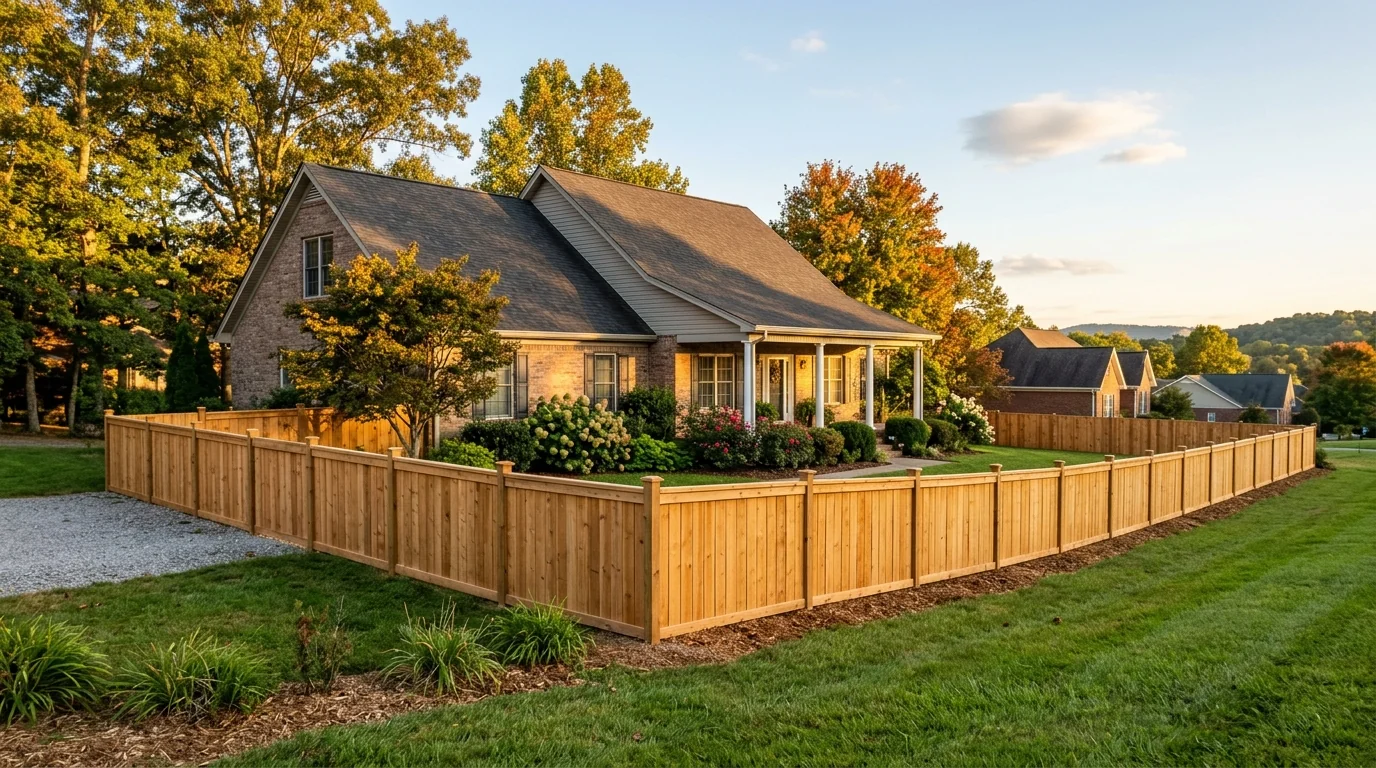
Pressure-treated Southern Yellow Pine is the default residential fence material in Knox County, and for good reason: it is locally available, affordable, and easy to customize. A properly installed privacy fence using treated pine will last 15 to 20 years. Cedar and redwood can reach 20 to 25 years because of their natural tannins, though they cost more upfront.
The enemies of wood fences in this region are moisture and ground contact. When posts sit in wet clay soil that cycles between saturated and dry (a routine condition in Knoxville’s Valley-and-Ridge terrain), the wood fibers swell and contract repeatedly. That process cracks the treated coating over time and invites rot. Staining or sealing every 2 to 3 years is not optional maintenance in this climate. It is what separates a 12-year fence from a 20-year one.
Shaded backyards near wooded lots, common in neighborhoods like Karns and Powell, keep fence boards damp longer than fences in open, sun-exposed West Knox yards. Trim back vegetation touching the fence and keep mulch and soil away from the base of boards whenever possible.
For current wood fence pricing, the fence cost guide covers material and labor breakdowns in detail.
Vinyl Fences: The Low-Maintenance Middle Ground
Vinyl has grown steadily in Knoxville’s newer subdivisions, particularly in the Hardin Valley and Northshore corridors where buyers are drawn to the low upkeep. The material does not rot, rust, or need painting, and it tolerates Knox County’s wet seasons well.
Realistically, vinyl fences last 20 to 30 years. The main failure modes are physical impact (from fallen tree limbs after ice storms, a documented Knoxville winter hazard) and UV degradation in panels that lack quality UV inhibitors. Cheaper vinyl goes chalky and brittle after prolonged sun exposure on south-facing yards.
One note for buyers in HOA communities: Farragut, which has some of the strictest fence design standards in Knox County, sometimes specifies approved vinyl colors and profiles. Confirm your panel choice against the Town of Farragut Community Development guidelines before ordering materials.
National average vinyl installation ranges from $2,292 to $5,799 per Bob Vila’s vinyl fence cost guide.
Aluminum Fences: The Longest-Lived Option for Knoxville’s Climate
Aluminum is the standout choice for longevity in a wet climate. It will not rust, rot, or warp, and most residential-grade aluminum fencing carries a lifetime limited warranty from the manufacturer. Expected lifespan runs 30 to 50 years with minimal intervention beyond occasional washing.
This is why aluminum ornamental fencing has become the preferred material in West Knox lakefront communities around Northshore and Choto, and in higher-end planned communities where the aesthetic needs to hold up for decades. It looks sharp, it handles Knox County’s humidity without deteriorating, and HOA architectural review boards generally approve it readily.
The trade-off is upfront cost. At $17 to $90 per linear foot installed (Bob Vila), aluminum sits above wood and vinyl. For a typical 155-linear-foot Knoxville yard, that is a meaningful difference in project budget.
Chain Link: Functional and Forgettable (but Durable Enough)
Chain link fences last 15 to 25 years depending on gauge and coating quality. Galvanized chain link holds up reasonably well in Knox County’s climate, though thinner gauges show rust at cut edges and at ground contact points within 8 to 10 years. Vinyl-coated chain link adds 5 or more years to the realistic lifespan.
Chain link is not popular for privacy or curb appeal in residential Knoxville, but it is a practical option for dog runs, garden perimeters, and utility enclosures where cost matters more than appearance. Installation costs between $15 and $30 per linear foot (Bob Vila).
What Knoxville’s Climate and Soils Do to Fence Lifespan
Three local factors consistently shorten fences faster here than the national averages suggest.
Rainfall and clay soils. Knox County’s 47.9 inches of annual rainfall (NWS Morristown) saturates the residual clay and silty clay soils typical of the Valley and Ridge province. These soils have moderate-to-high shrink-swell potential (USDA Web Soil Survey, Knox County). Posts set in these soils experience seasonal heaving: frost or repeated wet-dry cycles push posts upward or tilt them, cracking panels and gates.
Ice loading in winter. Unlike Huntsville or Atlanta, Knoxville gets meaningful winter ice events. Ice accumulation adds significant weight to fence panels and to tree limbs hanging over fences. Wood shadow-board and lattice-top styles are especially vulnerable. The aftermath of ice storms is one of the most common reasons homeowners in East Tennessee find themselves calling a repair contractor.
Hurricane and tropical storm remnants. The remnants of Hurricane Helene in September 2024 caused widespread tree failures and saturation-driven damage across Knox County. Fences in wooded lots took significant damage from falling limbs and saturated soils undermining posts. If your fence is older and near mature trees, wind-and-saturation events like that one can compress an aging fence’s remaining useful life quickly.
Local Permit and HOA Considerations
Most residential fences in Knoxville do not require a permit. The City of Knoxville and unincorporated Knox County both require permits for fences over 6 feet, and the Town of Farragut has its own separate and stricter design review process. Typical permit fees run $40 to $90.
If you are in a planned community in Farragut, Hardin Valley, or Northshore, check HOA covenants before selecting a material or height. Front-yard fence restrictions and maximum 6-foot privacy fence heights are common in West Knox HOA neighborhoods.
Pool barrier fencing across the metro must meet IRC requirements: a minimum of 48 inches in height with a self-latching gate, per U.S. Consumer Product Safety Commission guidelines.
What This Means for Your Buying Decision
If you are primarily focused on cost and planning to stay in your home 10 to 15 years, a well-installed pressure-treated wood fence delivers good value, assuming you commit to the maintenance schedule. If low maintenance is the priority and the budget allows, vinyl or aluminum will outlast wood by a decade or more in Knox County’s wet conditions.
Fences that are already past their material lifespan, leaning at posts, or showing widespread rot across sections are usually better candidates for full replacement than repair. Patching boards on a fence with compromised posts just delays the inevitable. The fence repair service page walks through the difference between repairs that make financial sense and those that don’t.
When you are ready to compare options for your specific yard, the fence installation service hub covers all the materials available in the Knoxville metro. You can also get a free project estimate based on your lot size and material preference.
The right fence for a Knoxville yard is the one that accounts for local soil conditions, your maintenance tolerance, and how long you plan to stay in the home. Material lifespan data is the starting point for making that call with confidence.
Climate data: NWS Morristown (KMRX), 1991-2020 Climate Normals. Soil data: USDA Web Soil Survey, Knox County, Tennessee. Cost figures: Bob Vila fence installation cost guide and Bob Vila vinyl fence cost guide.
Free written quote
Planning a fence? Get a free quote.
On-site measure and a written quote within 24 hours. No obligation.
Questions
How Long Do Fences Last by Material FAQs
How long does a wood fence last in Knoxville, TN?
How long does a vinyl fence last?
How long does an aluminum fence last?
How often does a wood fence need to be stained?
What shortens a fence's lifespan the most?
When should I repair vs. replace a fence?
Does a fence increase home value in the Knoxville area?
Free quote
Talk to a Knoxville fencing pro
On-site measure and a written quote within 24 hours. No obligation.