Service area · Tennessee
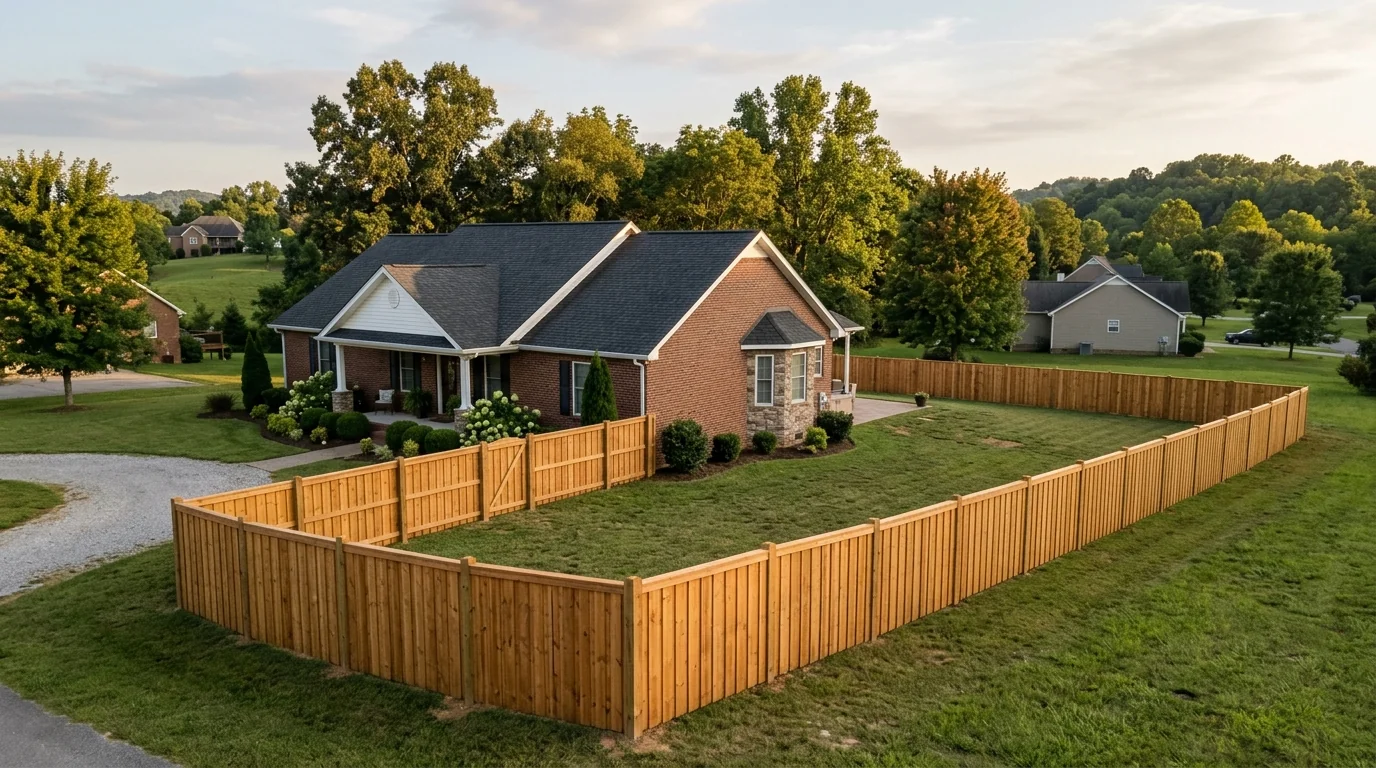
Fence installation in Alcoa
Alcoa, TN sits in Blount County just south of Knoxville, where silty clay loam soils and sloped terrain shape every fence post installation. Homeowners here deal with expansive soils and grade changes that require careful planning before any panel goes up. Local permitting runs through Blount County and the City of Alcoa, and material choices range from wood privacy fences to vinyl and aluminum depending on the neighborhood.
Typical foundation type: mixed
Why Alcoa Fence Installation Is Different
Alcoa sits in Blount County, Tennessee, tucked between the Knoxville metro and the foothills of the Great Smoky Mountains. According to Wikipedia, the city had a population of 10,978 at the 2020 census and functions as a smaller industrial and residential community within the broader Knoxville metropolitan area. That context matters for fence buyers because Alcoa is not a flat, cookie-cutter suburban grid. The terrain changes elevation quickly, the soils are heavy with clay, and the housing stock reflects decades of industrial-era construction alongside newer infill development. Anyone planning a fence project here needs to account for all three of those factors before a single post hole gets dug.
Soil and Geology
The dominant soil series in Alcoa and the surrounding Blount County landscape includes Sequoia silty clay loam, Dewey silty clay loam on 6 to 15 percent slopes, and Dewey-Collegedale complex on similar grades, according to USDA NRCS data available through the USGS Soil Data Access service. These soils share a common trait: they are shrink-swell clays. When rain soaks into the ground, the clay fraction expands. During dry spells, it contracts. A fence post set in standard concrete without accounting for that movement will begin to heave and lean within a few seasons. The eroded phases noted in the NRCS data, specifically the eroded sloping phase of Sequoia and the severely eroded Dewey-Collegedale complex, indicate that topsoil has been removed over time on many parcels, leaving heavier clay subsoil closer to the surface than on undisturbed land. That makes the soil problem more acute, not less, for Alcoa fence installations.
Contractors who understand this will specify deeper post embedment, typically 30 to 36 inches, and may recommend a wider concrete collar at the base to distribute lateral pressure. Those who don’t understand local soils will install to minimum generic specs and leave the homeowner with a leaning fence inside of three years.
Climate Considerations
Alcoa experiences the humid subtropical climate typical of the Knoxville metro. Summers bring sustained heat and humidity, and winters are mild but include freeze-thaw cycles that further stress fence posts embedded in clay. Wood fencing absorbs moisture throughout the humid season, which accelerates rot at the base where wood meets soil. Vinyl and aluminum fences sidestep the rot issue but still require properly set posts to handle soil movement through freeze-thaw cycles. Contractors working here should specify pressure-treated lumber for any wood posts and use concrete mixes appropriate for freeze-thaw conditions rather than standard bag concrete.
Housing Era
Alcoa’s residential character reflects its origins as a company town built around the Aluminum Company of America operations that gave the city its name. Much of the older housing stock dates to mid-twentieth-century construction, with smaller lots, mature trees, and property lines that may not have been formally surveyed in decades. Newer development near the Airport Road corridor and southern edges of the city adds more contemporary suburban homes with larger yards and HOA-governed communities. For fence buyers, that mix means some projects involve replacing aging wooden fences around older cottage-style homes, while others mean installing new privacy fences from scratch in newer subdivisions where neighbors are close and privacy is the primary driver.
Alcoa Neighborhoods and Fencing Patterns
Different parts of Alcoa present different fence challenges and preferences. Here is a quick read on the areas that come up most often in local fence projects.
- Springbrook, Established residential area with mature trees; root intrusion near property lines is a common complication for post-hole digging.
- Hunt Road Corridor, Mix of older ranch-style homes and newer builds; wood privacy fences dominate, with some vinyl replacement projects on newer lots.
- West Alcoa, Quieter residential streets with modest lot sizes; picket and privacy wood fences are the most common request.
- Gill Street Area, Older housing stock near the historic industrial core; many original fences are past their service life and ready for full replacement.
- Airport Road District, Active growth zone with newer single-family homes; vinyl and aluminum fencing popular for low maintenance in newer construction.
- Martin Mill Pike Area, Sloped terrain increases grade-step requirements; stepped panel installations are standard practice rather than the exception.
- Old Maryville Highway Corridor, Long-established neighborhood with mixed housing ages; boundary fence disputes occasionally arise where original property pins have shifted.
- South Alcoa Industrial Edge, Transitional zone between residential and commercial uses; privacy and security fencing in heavier gauges see more demand here.
- Topside Road Area, Larger lots with rural character; split-rail and farm-style fencing appears alongside traditional privacy styles.
How to Find an Alcoa Fence Installation Contractor
Shopping for a fence contractor in Alcoa is not the same as shopping in a flat-terrain suburb. Four criteria matter more than price alone.
Warranty terms that reflect local soil conditions. A standard one-year labor warranty is easy to offer. A contractor confident in their work on Blount County’s clay soils should be willing to back post integrity for longer, because they know they set the posts deep enough and used the right concrete to handle the shrink-swell cycle. If a contractor cannot explain what their warranty covers when soils shift, that is a meaningful gap.
Specific knowledge of sloped lot installations. Ask directly: how do you handle a fence run that drops several feet in elevation across a standard residential lot? The correct answer involves stepping the fence panels in measured increments and managing drainage at the low end of each run. A contractor who says they will just “follow the grade” without explaining panel steps is likely to produce an uneven installation that leaves ground gaps at the bottom.
Local experience that is verifiable, not just claimed. Any contractor can say they have worked in Alcoa. Ask for references in Blount County specifically, and ask those references about their experience with fence movement over time. A contractor whose work stays plumb through two or three winters on clay soil has demonstrated something that a one-season estimate cannot.
Diagnostic discipline before quoting. A responsible contractor will walk your property before putting a price on paper. They should check grade changes, identify tree roots near the fence line, note any drainage issues, and flag any easements or utility lines that affect post placement. A quote delivered over the phone after a five-minute conversation is not a quote rooted in your specific site.
Homeowners ready to start that process can request a free fence installation quote and get a site-specific walkthrough scheduled.
What to Expect from an Alcoa Fence Inspection
A thorough pre-installation inspection in Alcoa covers four areas. Each one catches a different category of problem that shows up in local fence projects.
Exterior walk-around. The inspector walks the full proposed fence line and maps grade changes, noting where panel stepping will be required. They flag mature trees whose root systems could complicate post-hole digging and identify any sections where the property line may be unclear relative to existing markers. On Alcoa’s older lots, this step occasionally surfaces boundary questions worth resolving with a survey before fence work begins.
Interior property assessment. On the inside of the fence line, the inspector checks for drainage patterns that could pool water against fence bases. Wooden fence bases that sit in standing water after rain events rot far faster than those in well-drained soil. This step also identifies gate placement options relative to the home’s access points and any hardscape that affects post locations.
Soil condition check. The inspector probes the soil at several points along the fence line to assess clay content and current moisture. After a wet spring, Blount County clay soils can be saturated enough that post-hole walls collapse during digging. After a dry summer, the same soil can be hard enough to slow drilling. Knowing current conditions helps set realistic timelines and informs the concrete specification.
Utility and easement review. Before any post hole is started, the inspector confirms that 811 call-before-you-dig clearances are in place and checks the property survey for utility easements that restrict fence placement. In some Alcoa neighborhoods, underground utility lines run closer to property lines than homeowners expect.
Repair Methods Used Most Often in Alcoa
When existing fences fail in Alcoa, the cause is almost always soil movement, moisture damage, or both. The repair methods below reflect what comes up most often in this market. Each links to more detail on our site.
-
Post reset and concrete refooting. The most common repair in clay-soil markets. A leaning post is extracted, the hole is cleaned out and deepened, and the post is reset with a proper concrete collar. See fence repair options and pricing for a full breakdown. Post reset costs vary by material and depth; per-post pricing is best confirmed on-site.
-
Wood panel and rail replacement. Alcoa’s humid summers accelerate wood rot, especially on older privacy fences where the bottom rail sits close to soil. Individual panels or full rail runs can be replaced without removing the entire fence. Wood fence installation details explain material grades and treatment options relevant to this climate.
-
Full wood fence replacement. When rot or soil movement has compromised more than a third of a fence run, full replacement is usually more cost-effective than piecemeal repair. According to Bob Vila, wood fence cost ranges from $1,763 to $4,416 on average, with privacy fencing running $27 to $60 per linear foot. See the wood fence cost guide for a full range breakdown.
-
Vinyl fence installation as replacement. Homeowners replacing rotted wood often upgrade to vinyl for lower long-term maintenance. According to Bob Vila, the typical range for vinyl fence installation is $2,292 to $5,799, with a national average of $4,045. The vinyl fence cost guide covers height and style variables.
-
Aluminum fence installation. Popular near newer developments on the Airport Road corridor where HOAs specify metal fencing for aesthetics. Bob Vila reports aluminum fence costs averaging $17 to $90 per linear foot, with labor adding $30 to $80 per hour. See fence installation cost details for comparisons across all material types.
-
Gate rehang and hardware replacement. Gate failures are common when posts shift in clay soils. A gate that no longer latches or swings freely usually traces back to a post that has moved out of plumb. Rehanging without addressing the post movement is a temporary fix at best.
Alcoa Building Permits
Fence permits in Alcoa run through two potential jurisdictions depending on your specific address. Homes within Alcoa city limits fall under the City of Alcoa’s building department, while parcels in unincorporated Blount County are handled by the Blount County Building Department. Homeowners should confirm their jurisdictional status before starting a project, because submitting to the wrong department adds delays.
Generally, fences under a certain height on interior property lines do not require a permit in residential zones, but that threshold varies. Fences adjacent to corner lots, within sight-distance triangles at intersections, or placed near recorded utility easements are more likely to require review regardless of height. Pool barrier fencing is subject to its own requirements: the U.S. Consumer Product Safety Commission guidelines specify that pool barriers should be a minimum of 4 feet high, with gates that are self-closing and self-latching, per CPSC Publication 362.
Tennessee adopted the International Residential Code, which provides baseline standards for fence construction including post embedment depth and load requirements. Local amendments can tighten those standards, so checking directly with the applicable building department before pulling materials is always the right sequence. Contractors familiar with Blount County should be able to advise on permit requirements as part of their initial site visit.
Other Tennessee Cities We Serve
Alcoa homeowners sometimes need fence work that extends to adjacent properties or investment homes in neighboring communities. The same team covers the following nearby markets.
- Homeowners in the Knoxville urban core can find market-specific information on the Knoxville fence installation service area page.
- Residents along the southern edge of Knox County can review fence options on the Seymour fence installation service area page.
- Families in the Rockford area have access to the same Blount County soil knowledge through the Rockford fence installation service area page.
Alcoa homeowners ready to move forward can schedule a free on-site inspection or review the full fence installation cost guide to get a sense of material options before the first conversation.
Neighborhoods served
Alcoa neighborhoods
- Springbrook
- Hunt Road Corridor
- West Alcoa
- Gill Street Area
- Airport Road District
- Martin Mill Pike Area
- Old Maryville Highway Corridor
- South Alcoa Industrial Edge
- Topside Road Area
Questions
Alcoa fence installation FAQs
Why do fences in Alcoa shift or lean within a few years of installation?
How much does fence installation cost in Alcoa?
Do I need a permit to install a fence in Alcoa?
How do I verify a fence contractor has real experience in Alcoa?
Which Alcoa neighborhoods tend to need the most fence repairs?
Does your team offer free fence inspections in Alcoa?
What foundation type do most Alcoa homes have, and how does it affect fencing?
Free inspection
Free Alcoa fence estimate
On-site elevation survey, written quote within 24 hours, no obligation.