Fence Repair vs. Replacement: How to Decide in Knoxville, TN
Fence post replacement is the most common structural fix Knox County homeowners face, and it sits right at the center of the repair-or-replace decision. One bad post is a simple repair. Six bad posts spread across an aging wood fence is a different conversation entirely. This guide helps you read the signs correctly so you’re not throwing money at a fence that is already past saving.
What This Symptom Looks Like (And When to Act)
What Fence Failure Actually Looks Like
Fence problems fall into two broad categories: surface deterioration and structural failure. Surface deterioration includes peeling paint, weathered gray wood, minor fence staining needs, and isolated cracked boards. These are cosmetic and slow-moving. Structural failure involves leaning or racking panels, posts that wobble when you push them, sections pulling away from the post, gates that no longer latch or swing correctly, and posts that show soft, spongy wood at or below the soil line.
The dividing line between the two is the post. Panels, pickets, and rails can be replaced in sections without disturbing anything else. But a post that has rotted below grade or heaved out of alignment due to soil movement takes the connected sections with it, and no amount of surface patching corrects that.
Monitor vs. Act Now
A fence moves into “monitor” territory when the damage is isolated to one or two sections, the posts pass a screwdriver-probe test (see the inspection section below), and the fence is fewer than ten years old. In that case, documenting the problem and re-checking every few months is reasonable.
A fence moves into “act now” territory when three or more posts show rot at grade, when sections are visibly leaning more than two or three inches out of plumb, when gate hardware has failed because the post it is attached to has shifted, or when the fence was already repaired once in the same location within the past few seasons. Ice loading events, like the kind Knox County experienced during recent winters, can accelerate a slow lean into sudden collapse, particularly in fence sections where vines or overgrown vegetation added weight to already-stressed posts.
What NOT to Do
The most common DIY trap is sister-boarding: nailing a new picket over a rotten one without addressing the post underneath. This hides the problem for a season at best. A close second is using wood filler or caulk to patch split posts at ground level. Below-grade rot is a fungal and moisture problem. Topical treatments cannot reach the source. Painting over weathered, uncleaned wood without proper surface prep is another money-waster: the paint peels within a year because it has nothing solid to bond to.
What Causes Fence Deterioration in Knoxville, TN
Knoxville’s soil and climate create a specific set of conditions that push fences toward the “replace” side of the decision tree faster than homeowners in drier climates expect.
The primary culprit is Knox County’s residual clay and silty clay soil, formed from weathered limestone, dolomite, and shale in the Valley and Ridge province (USDA Web Soil Survey, Knox County). This soil holds moisture against buried wood for extended periods after rainfall, which provides exactly the sustained damp environment that wood-decay fungi prefer. Knox County receives an average of 47.9 inches of rainfall annually (NWS Morristown, KMRX, 1991-2020 Climate Normals). That rainfall saturates the clay, and because the Valley and Ridge terrain concentrates stormwater runoff into lower positions, posts in valley-position lots or near drainage paths face even greater moisture exposure.
The shrink-swell cycle compounds the problem. As clay soils absorb water they expand, exerting lateral pressure on fence posts. When they dry out they contract, leaving a gap. Over multiple years of this cycle, posts that were set plumb begin to tilt. On ridge-position lots where shallow bedrock is closer to the surface, the opposite problem sometimes occurs: rock augering may be needed to achieve adequate depth, and posts on those lots can move differently than posts in deeper clay.
Ice loading is a seasonal risk specific to this region that often goes unmentioned. When ice accumulates on fence panels and on overhanging tree limbs, it adds substantial concentrated weight. A section that was borderline structurally sound before an ice event may fail during or immediately after one. Wood and chain-link fences with vine growth are most vulnerable because the vegetation catches and holds ice.
Knoxville’s moderate tornado frequency, lower than the open terrain of Dixie Alley thanks to the Valley and Ridge geography (NWS Storm Prediction Center archive), means catastrophic wind damage is less common here than in many Southern markets. Remnants of Hurricane Helene in September 2024 were an exception: Knox County experienced significant wind gusts and saturation-driven tree failures that toppled or damaged fences across the county, particularly where mature trees fell onto fence lines.
Repair Methods That Address It
Fence Post Replacement
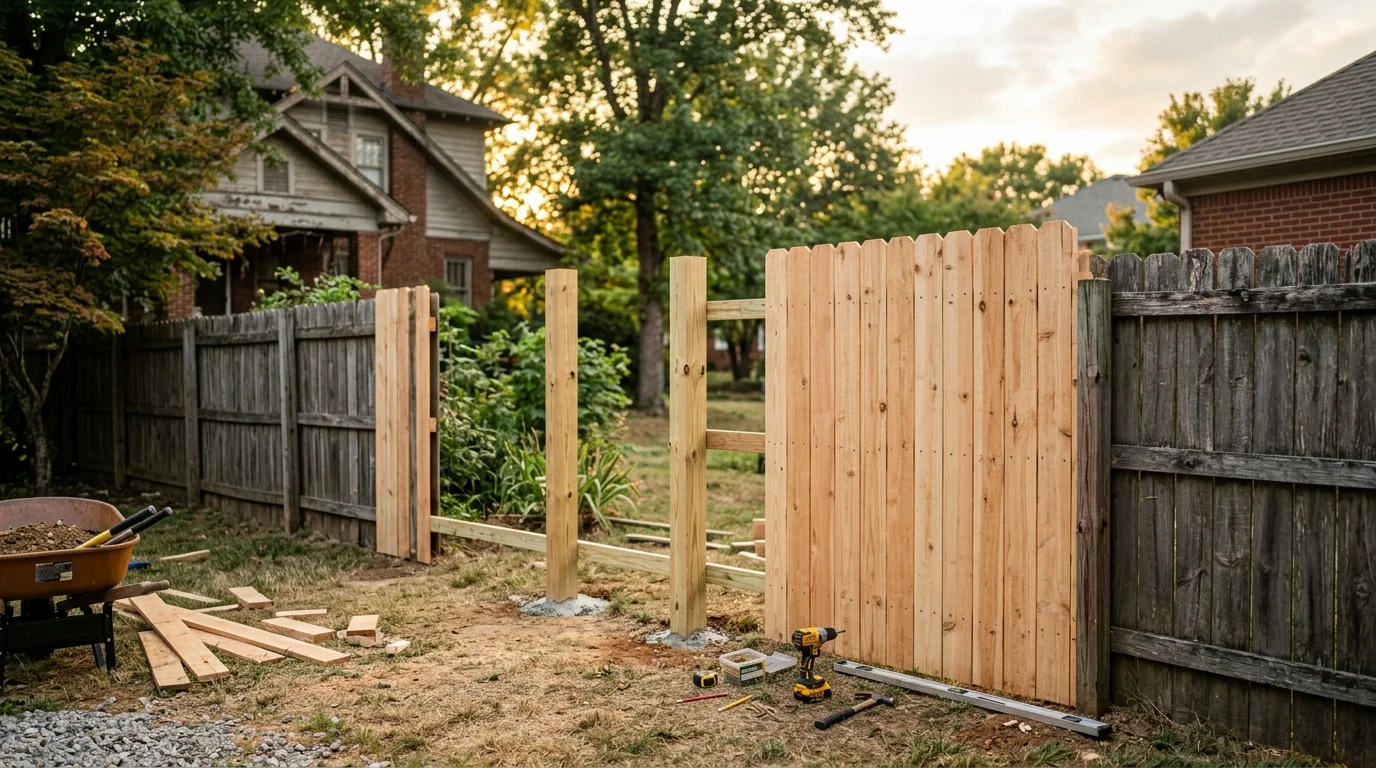
When posts are structurally compromised but surrounding panels are in acceptable condition, targeted fence post replacement is the most cost-effective path. The rotted or heaved post is extracted, the hole is cleaned out and evaluated for drainage issues, and a new pressure-treated post is set in concrete at the correct depth. For Knox County conditions, proper depth and concrete collar placement matter: a post set too shallow in clay soil will heave with the first significant freeze-thaw cycle.
Wood Fence Repair
If the posts are sound but rails, pickets, or boards have deteriorated, wood fence repair addresses those components without disturbing the structure. This includes re-nailing or screwing loose pickets, replacing split or missing boards, repairing or replacing gate hardware, and addressing minor rail sagging. Fence staining or sealing after repair extends the life of the repaired sections by slowing moisture absorption. This is the right approach when damage is genuinely isolated and the overall fence is fewer than 12 to 15 years old.
Partial or Full Wood Fence Installation
When repair scope creeps past 40 to 50 percent of the fence’s total length, a new wood fence installation often pencils out better. Southern Yellow Pine is the dominant residential material in Knoxville for good reason: it is pressure-treated to resist the fungal decay that Knox County’s damp clay soils promote. Starting fresh also gives homeowners the option to correct post spacing, drainage grading, and layout issues that contributed to the original failure.
Vinyl Fence Installation
Homeowners who want to exit the cycle of wood maintenance and periodic rot repair frequently consider vinyl fence installation as a long-term alternative. Vinyl does not rot and does not require staining. The trade-offs are brittleness in sharp cold snaps and a higher upfront cost. In newer West Knox subdivisions such as Hardin Valley and the Northshore area, vinyl has become increasingly common because HOA covenants in those communities often allow it and the low-maintenance appeal fits the lifestyle of dual-income households.
Typical Cost Range
Repair costs must be weighed against replacement costs to make a sound decision. According to Bob Vila, fence installation costs between $13 and $25 per linear foot on average nationally, with full project costs ranging from $1,743 to $4,431. Wood privacy fence material specifically runs $27 to $60 per linear foot installed, per Bob Vila’s wood fence cost guide. Vinyl fence installation runs $15 to $40 per linear foot in material cost, with full project ranges from $2,292 to $5,799 per Bob Vila’s vinyl fence cost guide.
In Knoxville, the average fence project covers roughly 155 linear feet, and typical job costs range from $1,900 to $5,800 depending on material and site conditions.
The practical repair-or-replace threshold: if the cost to repair isolated sections exceeds roughly half the cost of installing a comparable new fence, replacement is the better investment. For a more detailed breakdown of what Knoxville projects cost by material and scope, see the Knoxville fence cost guide.
The Inspection Process
A thorough inspection for the repair-vs-replace decision covers four things.
First, the screwdriver probe test at every post. A standard flathead screwdriver pressed firmly into the post at ground level should meet solid resistance throughout. Any post where the tip sinks more than a quarter inch into the wood without real force is compromised. Posts where probing produces soft, fibrous material or dark discoloration have active rot.
Second, the push test. With both hands, apply lateral pressure to each panel section. Movement of more than one to two inches before the section stiffens suggests the posts are no longer anchored properly in the concrete or that the concrete collar itself has cracked due to soil movement.
Third, elevation and plumb measurement. A four-foot level placed against each post identifies lean. Photographs taken from a fixed reference point at six-month intervals help document whether a problem is stable or progressing.
Fourth, a review of the fence’s age and repair history. A fence that has already had posts replaced in the same locations is telling you something about underlying drainage or soil conditions that a single repair did not correct.
When to Skip Repair (Or Wait)
Not every damaged fence needs immediate action. If a fence is cosmetically weathered but structurally sound, fence staining or cleaning and a sealing application may be all that is warranted. Properly applied penetrating stain on clean, dry wood can extend service life by several years.
If a fence has minor isolated damage and is fewer than five years old, monitoring over one or two seasons before committing to repair costs is reasonable. Document the damage location with photos and mark it with a small stake so you can tell whether the lean or crack is progressing.
Homeowners in the Farragut area or in other West Knox HOA communities should confirm material and height requirements before any repair or replacement begins. The Town of Farragut has separate and notably stricter fence design and permitting standards than the City of Knoxville or unincorporated Knox County. A repair that changes the fence’s appearance may trigger a design-review requirement even if the footprint stays the same.
When you’re ready to get a professional read on where your fence stands, request a free fence inspection and quote to find out whether repair or replacement is the right call for your specific situation.
For a broader overview of repair services available in the Knoxville area, visit the fence repair service hub.